

History regularly features in our travels as we discover archaeological sites, explore cities and learn about the events that have shaped our world. It’s particularly interesting to visit a place where a historical event occurred within our lifetime.
Many of us will remember the joyous scenes of November 1989 when the Berlin Wall was breached and people from East and West Berlin celebrated below the Brandenberg Gate. Having visited Berlin just once before, in the early ‘80’s, I was keen to see how the city has changed.
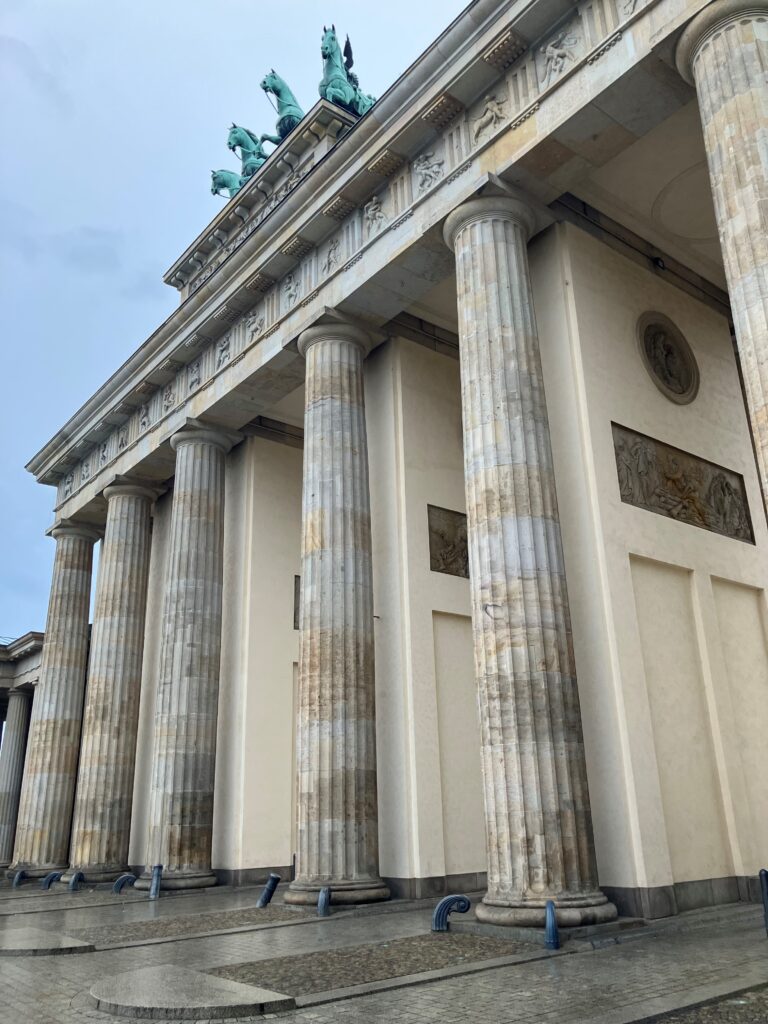
The Brandenberg Gate, Berlin’s most famous landmark was built around 1790 as the formal entrance to the imperial city of the Prussian monarchs.
The gate has been the defining image of Berlin through the turbulent twentieth century: bedecked by swastikas during the Nazi regime; surrounded by destruction after World War 2; isolated by the Wall during the Cold War. Today the area around the Gate has been rebuilt with major embassies and modern offices for financial institutions.
Nearby, the Reichstag has been reconstructed as the spectacular home of the German Parliament. Berlin is once again the capital of Germany and one of the most important cities in Europe.
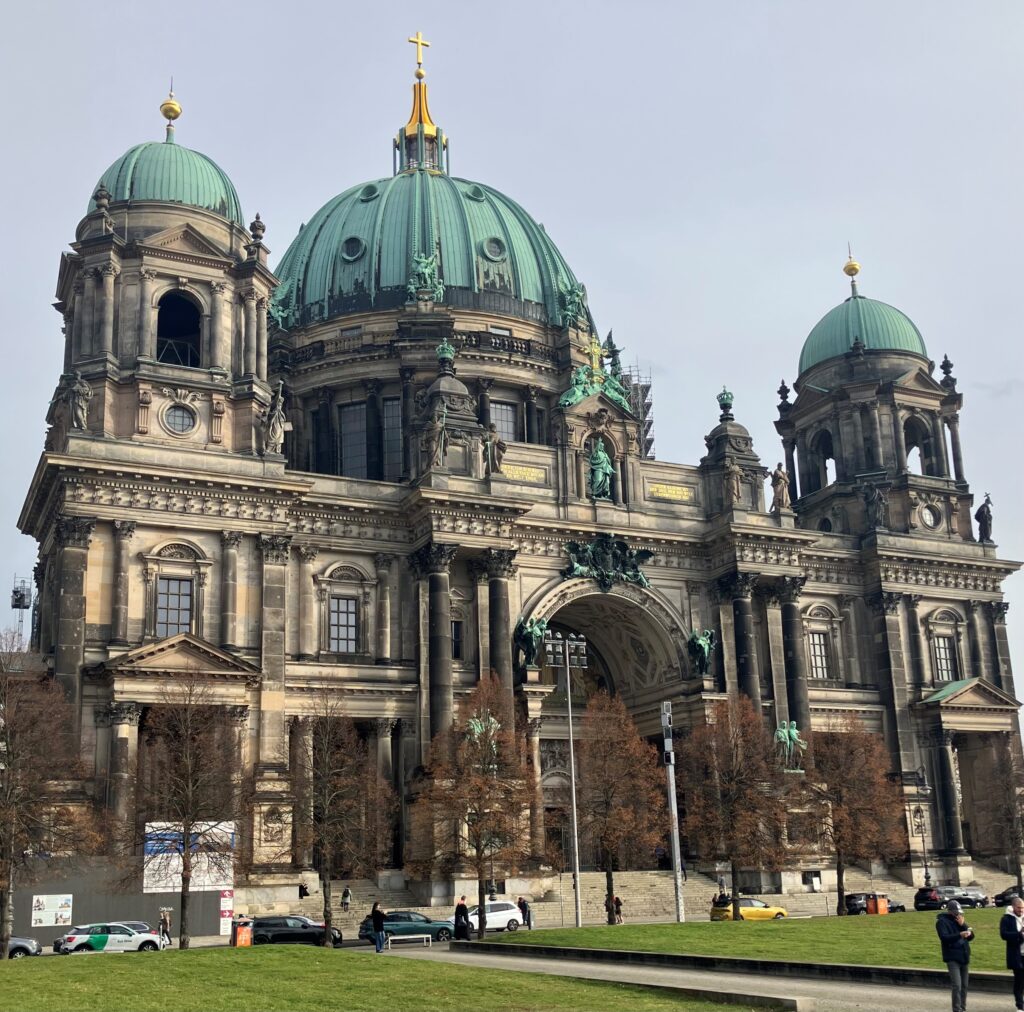
The Brandenberg Gate sits at the western end of Unter den Linden, a grand boulevard which led to the Royal palace. This place of monumental buildings, including the cathedral, churches, university, concert halls and museums was formerly within East Berlin and has undergone massive reconstruction since the reunification of the city.
The entire path of the Wall is marked by a line of cobblestones in the pavement, but otherwise it is not easy to differentiate between east and west. The west still has the grand shopping streets and department stores, but newly fashionable districts are in the east. A clear sign that Berlin has moved on and Berliners are confidently looking ahead.